
Elevating Leadership
Transformative Knowledge and Skills for the Modern Innovator
Elevating Leadership
Preparing Today's Leaders for Tomorrow's Challenges
CEOptions is proud of these awards for 2023







Leadership Coaching Services
Welcome to Creative Energy Options
Offering the Best in Management and Leadership Training
Based in the greater San Francisco, California area, Creative Energy Options offers award-winning leadership programs, consulting, and business coaching solutions.
Sylvia Lafair, our CEO, is an accomplished change management expert and executive coach with over 35 years of experience.
Our world-renowned programs capture effective ways to lead during change and uncertainty.
Unique and yet practical, the solutions you find from our trainings will benefit you at work and at home.
Check out Stress Busters, GUTSY Women Lead, and Total Leadership Connections (TLC) for the information you've been looking for and could never find...until now.
CEOptions has worked with these companies


“When preparation meets opportunity, success is guaranteed”
~Sylvia Lafair


Leadership Coaching Services
Watch this informative video about Total Leadership Connection (TLC)
Our Award Winning Coaching and Education Program
Learning how to lead is often considered to be a skill that is natural and not taught. While some people are natural-born leaders, everyone can benefit from leadership coaching services to improve the way that they lead their team. Read on to learn how Creative Energy Options can help you lead confidently and balance your work and personal life.
Whether you are a current leader or want to have more leadership opportunities, coaching services are a great way to cultivate your skills. Those under your leadership will appreciate that you are taking the initiative to improve your leadership skills. Those over you will notice your devotion to advancing your career and may give you more leadership opportunities.
For more information on our leadership coaching services, contact Creative Energy Options by calling (570) 233-1042. You can also learn more about our coaching services here. We look forward to helping you lead.

Total Leadership Connections
Named One of the Top Leadership Education Programs for
Nine Consecutive Years
SYLVIA LAFAIR PhD of CEOptions has been seen on

Award Winning Books
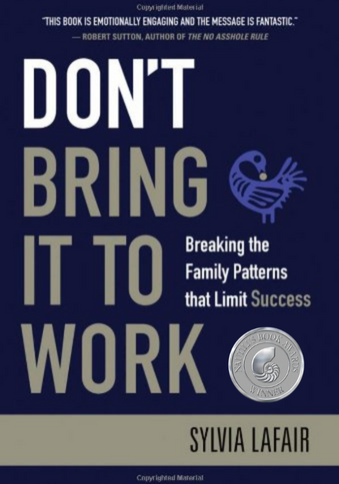
Don’t Bring It to Work: Breaking the Family Patterns That Limit Success
$24.95
eBook: $13.00
Genre: Business Culture
How can you get to the bottom of workplace behaviors that simply don't work for you or your organization?
Sharing is caring!
Details
Genre: Business Culture
Publication Year: March 3, 2009
Format: Hardcover
Length: 256 Pages
Narrator: Sylvia Lafair
ASIN: B001U5VJOK
ISBN: 0470404361
List Price: $24.95
eBook Price: $13.00
Don't Bring it to Work
How can you get to the bottom of workplace behaviors that simply don't work for you or your organization?
About the Book
Don’t Bring It to Work explores what happens when patterns originally created to cope with family conflicts are unleashed in the workplace.?This groundbreaking book draws on the success of Sylvia Lafair’s PatternAware program Total Leadership Connections. Throughout the book she shows how to break the cycle of pattern repetition and offers the tools that can turn unhealthy family baggage into creative energy that will foster better workplace associations and career success.
Lafair identifies the thirteen most common patterns that correspond to characters familiar to anyone who has ever worked in an office: Super Achiever, Rebel, Persecutor, Victim, Rescuer, Clown, Martyr, Splitter, Procrastinator, Drama Queen or King, Pleaser, Denier, and Avoider. To help overcome destructive behavior problems, she maps out the three main steps for becoming aware of patterns and finding the way OUT


Disclosure of Material Connection: Some of the links in the page above are "affiliate links." This means if you click on the link and purchase the item, I will receive an affiliate commission. I am disclosing this in accordance with the Federal Trade Commission's 16 CFR, Part 255: "Guides Concerning the Use of Endorsements and Testimonials in Advertising."

GUTSY: How Women Leaders Make Change
$11.95
eBook: $5.95
Genre: Management & Leadership
Its GOOD to be GUTSY! For some of us this is easy, to speak out, take risks, stand at the leading edge of change. For most of us we need a nudge. So, this is a great book to get you started on your path to being GUTSY!

Sharing is caring!
Details
Genre: Management & Leadership
Publication Year: November 6, 2012
Format: Paperback
Length: 142 Pages
ASIN: 1436814408
ISBN: 074146893X
List Price: $11.95
eBook Price: $5.95
How Women Leaders Make Change
Its GOOD to be GUTSY! For some of us this is easy, to speak out, take risks, stand at the leading edge of change. For most of us we need a nudge. So, this is a great book to get you started on your path to being GUTSY!
About the Book
Its GOOD to be GUTSY! For some of us this is easy, to speak out, take risks, stand at the leading edge of change. For most of us we need a nudge. So, this is a great book to get you started on your path to being GUTSY! Youll learn to Observe and Understand behaviors that have stood in the way of true collaboration, and Transform into the world of outstanding partnership. From exploring models of being GUTSY, to what it means to have a pink or blue blanket this entertaining book will give you the puzzle pieces to build a GUTSY You!!
Disclosure of Material Connection: Some of the links in the page above are "affiliate links." This means if you click on the link and purchase the item, I will receive an affiliate commission. I am disclosing this in accordance with the Federal Trade Commission's 16 CFR, Part 255: "Guides Concerning the Use of Endorsements and Testimonials in Advertising."

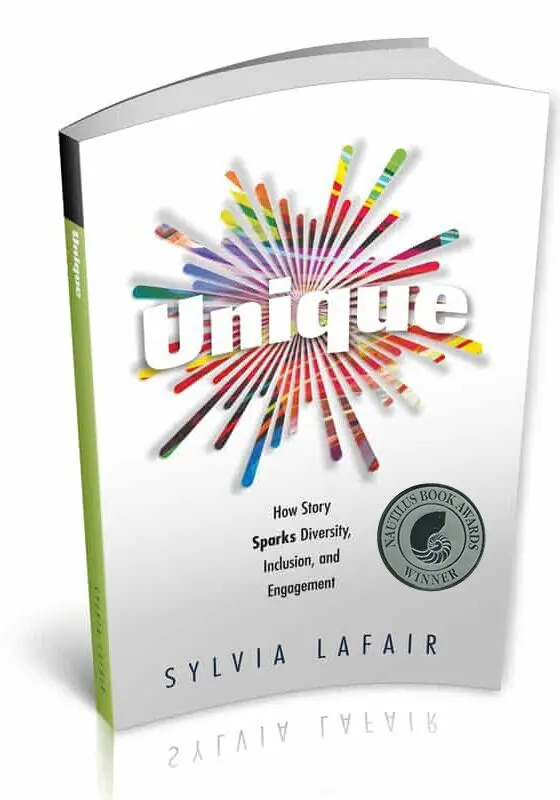
Unique: How Story Sparks Diversity, Inclusion, and Engagement
$11.95
eBook: $5.95
Genre: Business Culture
WE ARE ALL UNIQUE AND CONNECTED Everyone has a back story. Everyone. Most of us put on a mask or hide behind a shield and keep our stories hidden. Not anymore.
Sharing is caring!
Details
Genre: Business Culture
Publication Year: June 12, 2014
Format: Paperback
Length: 146 Pages
ASIN: 1436814611
ISBN: 0988362511
List Price: $11.95
eBook Price: $5.95
How Story Sparks Diversity, Inclusion and Engagement
WE ARE ALL UNIQUE AND CONNECTED Everyone has a back story. Everyone. Most of us put on a mask or hide behind a shield and keep our stories hidden. Not anymore.
About the Book
WE ARE ALL UNIQUE AND CONNECTED Everyone has a back story. Everyone. Most of us put on a mask or hide behind a shield and keep our stories hidden. Not anymore. This book helps you find your story, your place as a leader. “Story is the most powerful tool in a leader’s arsenal,” says Harvard Professor Howard Gardner. Stories teach us about courage, creativity, compassion, and collaboration. Once you learn to tell your story you develop a personal brand that puts you head and shoulders above your peers. Become the best you can be with these important business tools: SANKOFA MAPPING™ to see behaviors that are handed from generation to generation The OUT Technique™ so you can Observe, Understand and Transform behavior patterns PEP Talks™ to discuss difficult subjects and get great results.
Disclosure of Material Connection: Some of the links in the page above are "affiliate links." This means if you click on the link and purchase the item, I will receive an affiliate commission. I am disclosing this in accordance with the Federal Trade Commission's 16 CFR, Part 255: "Guides Concerning the Use of Endorsements and Testimonials in Advertising."

Invisible Stress: It's NOT What YOU Think!
$11.95
eBook: $5.95
Genre: Business Culture
This new best seller "Invisible STRESS (It's NOT What YOU Think!)" offers skills vital for the uncertainty of our times and will benefit everyone personally as well as professionally.
Sharing is caring!
Details
Genre: Business Culture
Publication Year: October 5, 2021
Format: Hardcover
Length: 120 Pages
Narrator: Sylvia Lafair
ASIN: 0988362570
ISBN: 0988362570
List Price: $11.95
eBook Price: $5.99
Invisible Stress (It's NOT What YOU Think!): Identify and Change the Patterns and Behaviors Controlling Your Life
Survival Guide to identify your INVISIBLE STRESS, Live in the SAFE STRESS ZONE, and ENRICH YOUR LIFE
About the Book
You first become aware of stress and you then seek treatment. But what if you are not aware of it in the first place?
Invisible stress. Surprisingly, there is a level of stress that can remain hidden. It is this form of stress that award-winning author Sylvia Lafair, Ph.D. brings to light in 'Invisible Stress (It's NOT what YOU Think!): Identify and Change the Patterns and Behaviors Controlling Your Life'. "
• Discuss the fourth level, invisible stress, with information not available till now.
• Gain cutting-edge methods to tackle root causes of overwhelm and self-doubt.
• Acquire powerful yet simple ways to make stress work for you.
• Gather tips to build confidence and strengthen resilience during tough times.
• Learn how to adopt healthy daily behaviors to stay in the safe stress zone.
• Explore coping mechanisms to manage today’s accelerated rate of change.
• Master new leadership skills for less stress and a more harmonious life.
Disclosure of Material Connection: Some of the links in the page above are "affiliate links." This means if you click on the link and purchase the item, I will receive an affiliate commission. I am disclosing this in accordance with the Federal Trade Commission's 16 CFR, Part 255: "Guides Concerning the Use of Endorsements and Testimonials in Advertising."
Testimonials





Want to Know More About How We Transform Lives?
Sign Up for Dr. Sylvia Lafair’s Newsletter Now!
Want to Know More About How We Transform Lives?
Sign Up for Dr. Sylvia Lafair’s Newsletter Now!
Latest Articles From Dr. Sylvia Lafair
RECENT BLOG POSTS





Work with Us to Keep Going and Keep Growing
We offer 1:1 Coaching and Online Programs